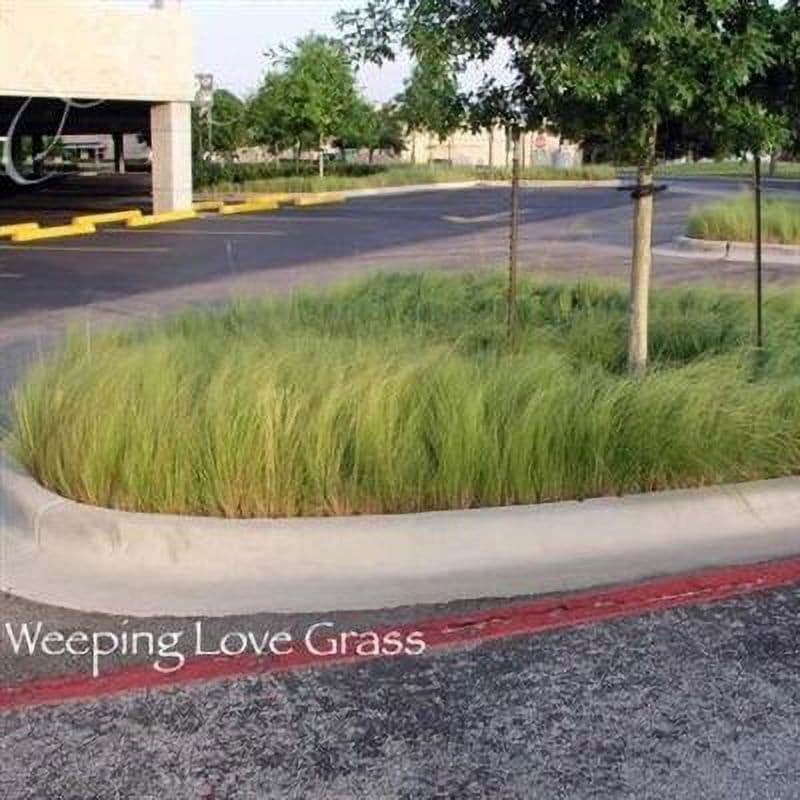
SeedRanch Weeping Lovegrass Seed (50 Lbs.)
Overview: Weeping lovegrass is a long-lived perennial bunchgrass suited to summer-rainfall climates. It tolerates drought well and typically rebounds quickly when rains return, but in critical low-precipitation areas occasional prolonged droughts can kill even well-established stands. Regions receiving less than 15 inches of annual rainfall are considered hazardous for this species. Moderate grazing that prevents excessive leaf buildup (and the resulting higher transpiration) can reduce the risk of drought-related loss. Origin and use: The first accession was introduced to the United States in 1928 from a 1927 collection in north-central Tanganyika (Tanzania). Native to south and east Africa, it commonly occupies the successional stage just before climax. In the U.S. it was widely planted for erosion control across the Southwest and south-central states from 1936 to 1945; acreage increased slowly into the late 1950s and then rose rapidly in Oklahoma and Texas during the 1960s. Soil and pH tolerance: Weeping lovegrass establishes on a wide range of soils. It performs well on sandy loams—its preferred medium—and on deep sands in semiarid west Texas. In higher-rainfall locations such as southeastern Oklahoma and northeastern Texas it also does well on clay loam soils. Soil pH has relatively little effect: the grass grows on acidic soils of the southeastern U.S. and on highly basic soils, but it is not adapted to severely alkaline conditions. Plants can grow on soils with pH 8, yet severe chlorosis often develops as the growing season continues; soils high in sodium can cause plant death. The species prefers well-drained soils and cannot tolerate standing water. Fertility, management and renovation: Although it will grow on low-fertility sites, weeping lovegrass achieves its best production on fertile soils. Ungrazed stands tend to become decadent, weak, and low in vigor. Proper fertility management improves forage quality and palatability—"no grass can take out soil nutrients that are not there and produce luxuriant nutritious forage," and weeping lovegrass responds well to appropriate fertilization. Renovation of decadent stands often begins with burning just before spring green-up. Climate limits and regional recommendations: Geographically, the species is best adapted to areas of Texas and Oklahoma with more than 15 inches of annual rainfall. It is more winter-hardy than other lovegrasses, but cold limits its northward range to about the northern boundary of Oklahoma. Winter injury is most likely after rapid fall temperature drops while the grass is still actively growing, and during severe cold combined with dry soil. Fall growth triggered by rainfall, irrigation, fertilization, or grazing increases susceptibility to freeze damage, so fall grazing is discouraged until plants have entered full winter dormancy. Though it is adapted across the southeastern U.S., weeping lovegrass is generally used there primarily for conservation. In the arid southwest its use is limited to irrigated sites, favorable microsites such as swales, and areas where annual rainfall is roughly 15 inches or greater.
Shipping & Returns
Shipping & Returns